

We at VG Stories would like to wish you a safe, happy, and colorful Easter. But before you go, let's paint a virtual Easter egg! Join us as we use VGSTUDIO MAX to create and export colorful meshes for 3D printing!
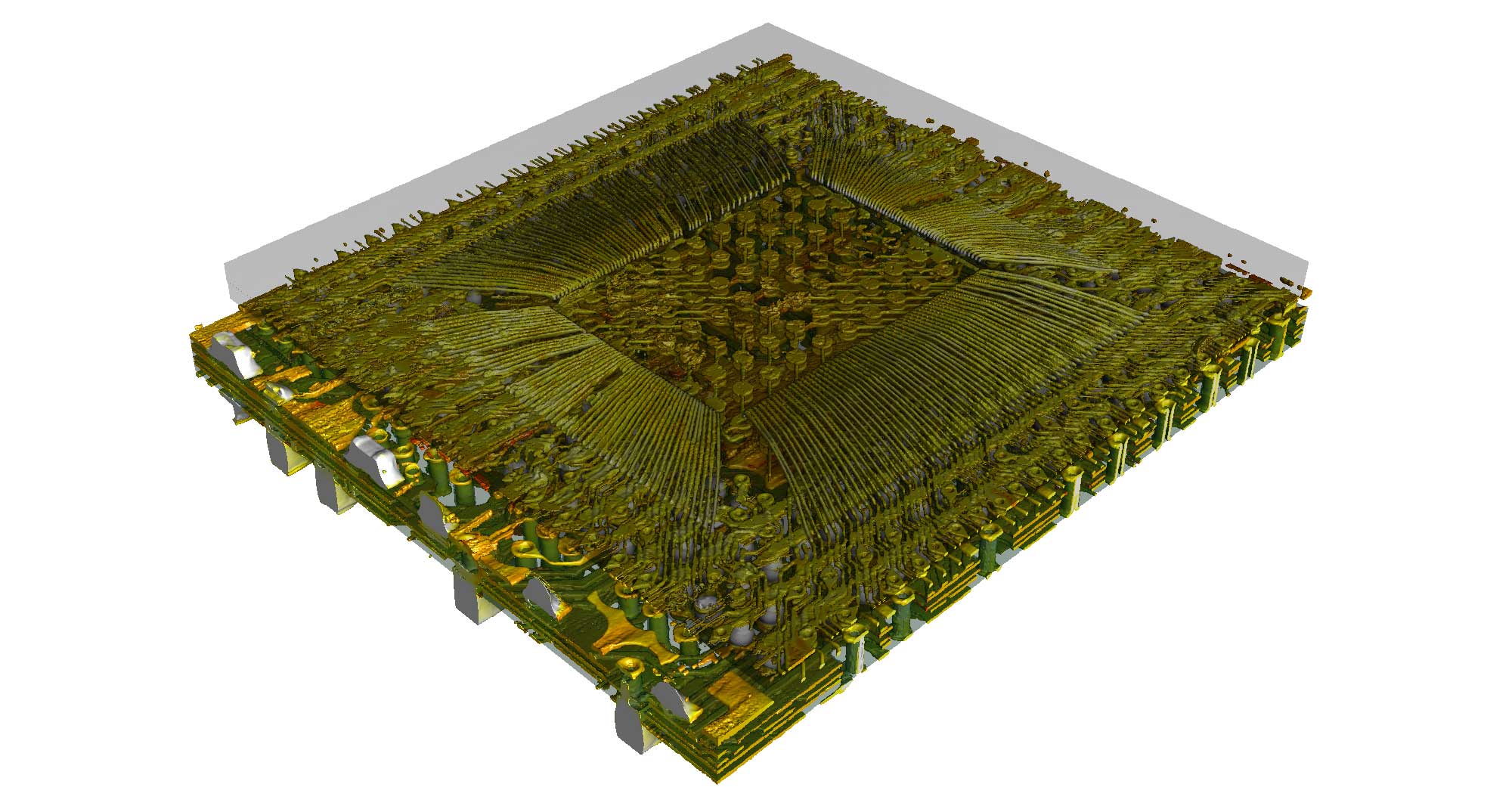
How Hexagon empowers the French Defence Procurement Agency (Direction générale de l’armement, DGA) with 3D CT data segmentation using VGTRAINER and AI.
Until now, analysts at the Direction générale de l’armement (DGA) of the French Ministry of Defence needed a great deal of time to evaluate CT scans of printed circuit boards — one single board could take up to an entire day. Experts examined the data voxel by voxel to identify conductive connections between the vias and thus decode the circuitry. It was clear to the DGA: this process needed to be faster, more precise, and more wide ranging. With AI-based training using Hexagon’s VGTRAINER, evaluations can now be completed within seconds — while achieving higher accuracy and enabling larger data volumes to be processed efficiently in VGSTUDIO MAX.
When the DGA receives a new printed circuit board — such as from drones or other airborne systems with highly complex control mechanisms — analysts can look directly inside. Using computed tomography, the agency generates high-resolution 3D datasets, which are digitally evaluated during subsequent postprocessing. Every detail counts: The data reveals insights into internal structures, tight geometries, and even the smallest features such as traces and solder joints — completely non-destructively and without time-consuming physical sectioning.
As France’s defense procurement authority, the DGA operates under substantial pressure for both speed and precision. For the design, assessment, and further development of defense systems and operations, correct information must be available as quickly as possible. This also applies to the postprocessing of complex 3D CT scans. That’s why some sites of the agency began collaborating with Hexagon as early as ten years ago and have since relied on software solutions such as VGSTUDIO MAX for non-destructive analysis. The department responsible for analyzing circuit boards has now taken another step forward: it explored the possibilities of automated data evaluation using artificial intelligence — and thereby its own optimization potential.

Turbine blades are a critical component for jet engines. Ensuring their quality is not just a safety consideration; high-quality turbine blades ensure optimal engine performance, fuel efficiency, durability, and reduced emissions.
It’s important to remember here that the aerospace industry is not like the high-volume world of automotive where samples from the production line are tested. In aerospace, every blade must be tested.
Of course, embedding rigorous inspection processes into manufacturing also helps to detect potential turbine blade issues before they lead to failures. But such a rigorous inspection routine can involve multiple processes, such as tactile or optical 3D coordinate measuring machines (CMMs) for the external dimensions in tandem with computed tomography (CT) for internal dimensions and structure.
One manufacturer, Safran Tech, identified this as an area where efficiency improvements could be made. Safran Tech is part of Safran Group - the world’s second largest aircraft equipment manufacturer, employing over 92,000 people and generating 27.31 billion euros in revenue (2024).
A New Hope
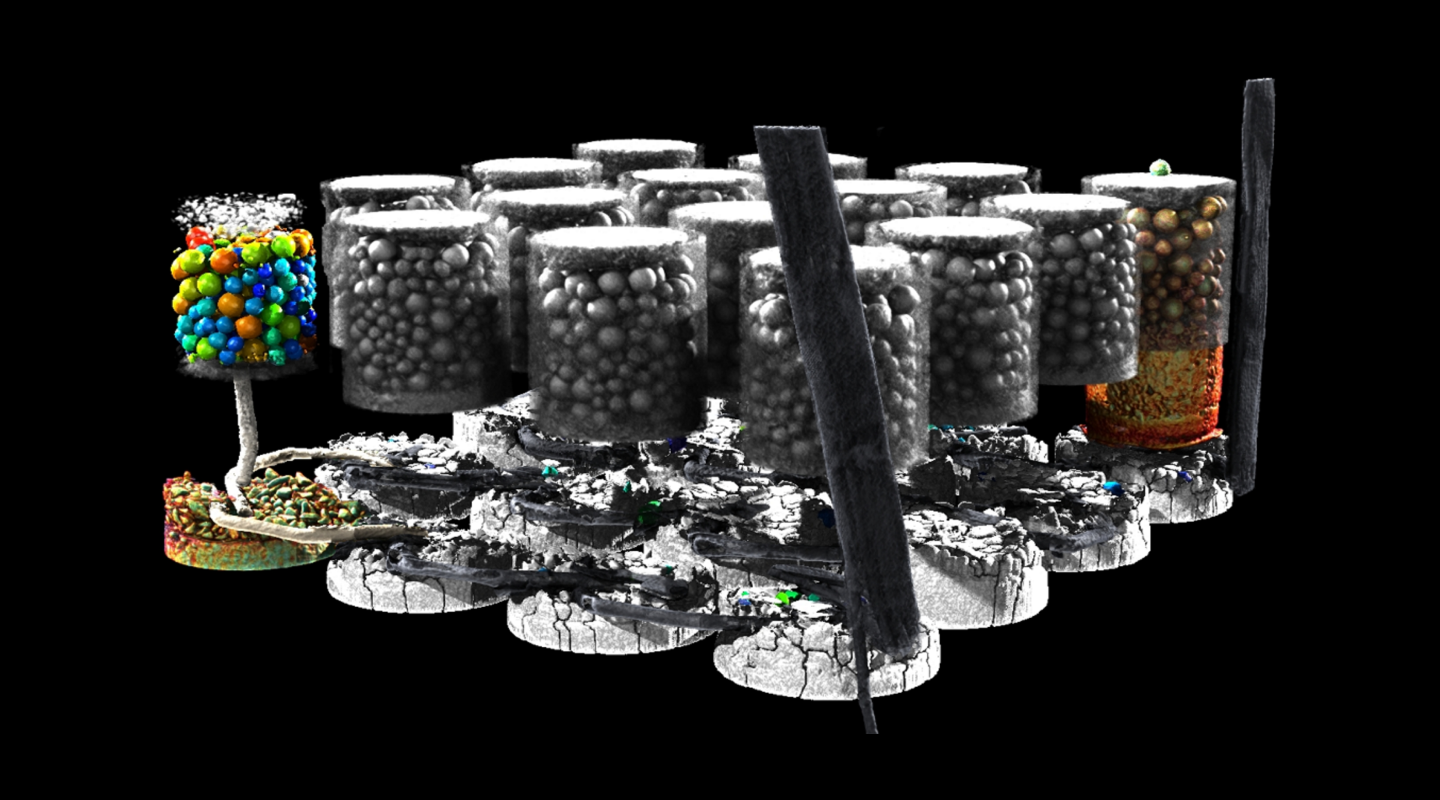
We at VG Stories would like to wish you a fantastic start to the new year! And what better—and environmentally friendlier—way to celebrate than virtual firecrackers? Join us as we use VGSTUDIO MAX to examine what, exactly, gives a firecracker its spark!
Reconstructing a Fountain Pen
Gifts often hold great sentimental value—so great, in fact, that it is hard to believe such a small chip can make such a huge dent in function. At least, that was the case when a customer had a beloved fountain pen that no longer wrote. Check out this story of how they used VGSTUDIO MAX to segment, measure, and reconstruct parts of the pen!
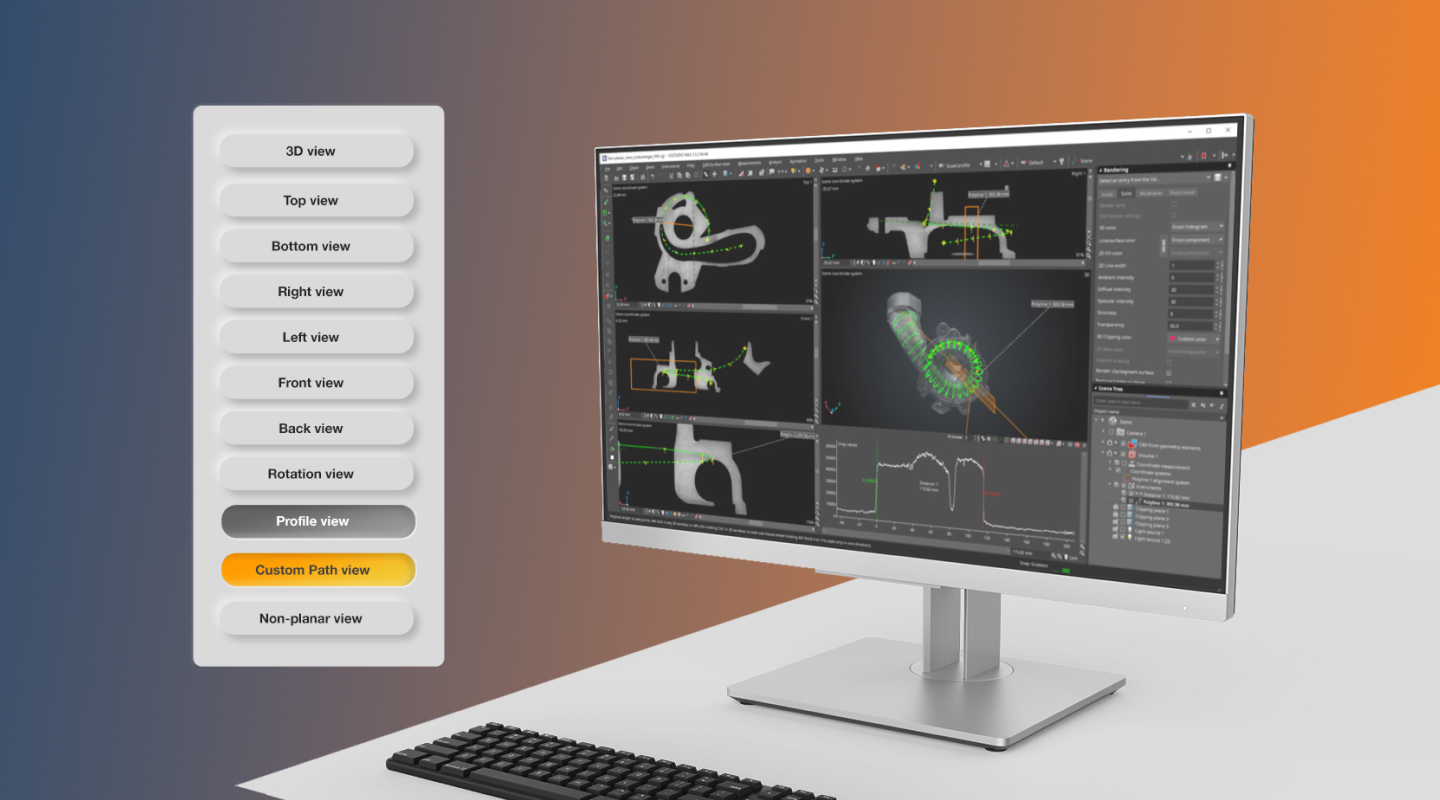
Last week, we did a deep dive into the non-planar and rotation view of VGSTUDIO MAX. This week, we'll be exploring two more views: custom path and profile window. Join us as we use VGSTUDIO MAX to gain even more perspective on… well, perspective!
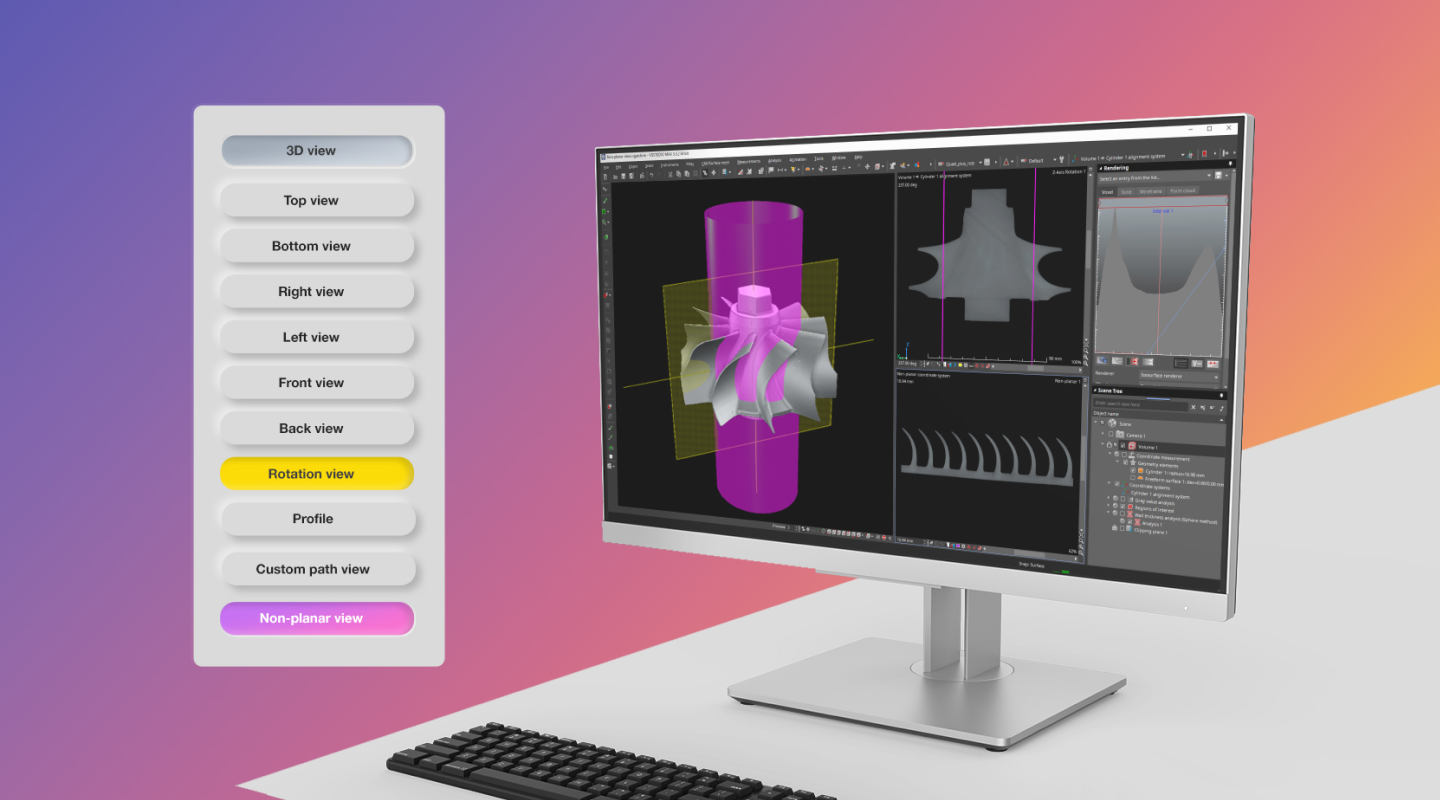
Non-Planar and Rotation View
Sometimes, to get to the core of a problem, all we need is a new set of eyes—and the possibility of perspective. Join us as we use the rotation and non-planar views of VGSTUDIO MAX to explore every nook and cranny of different objects!
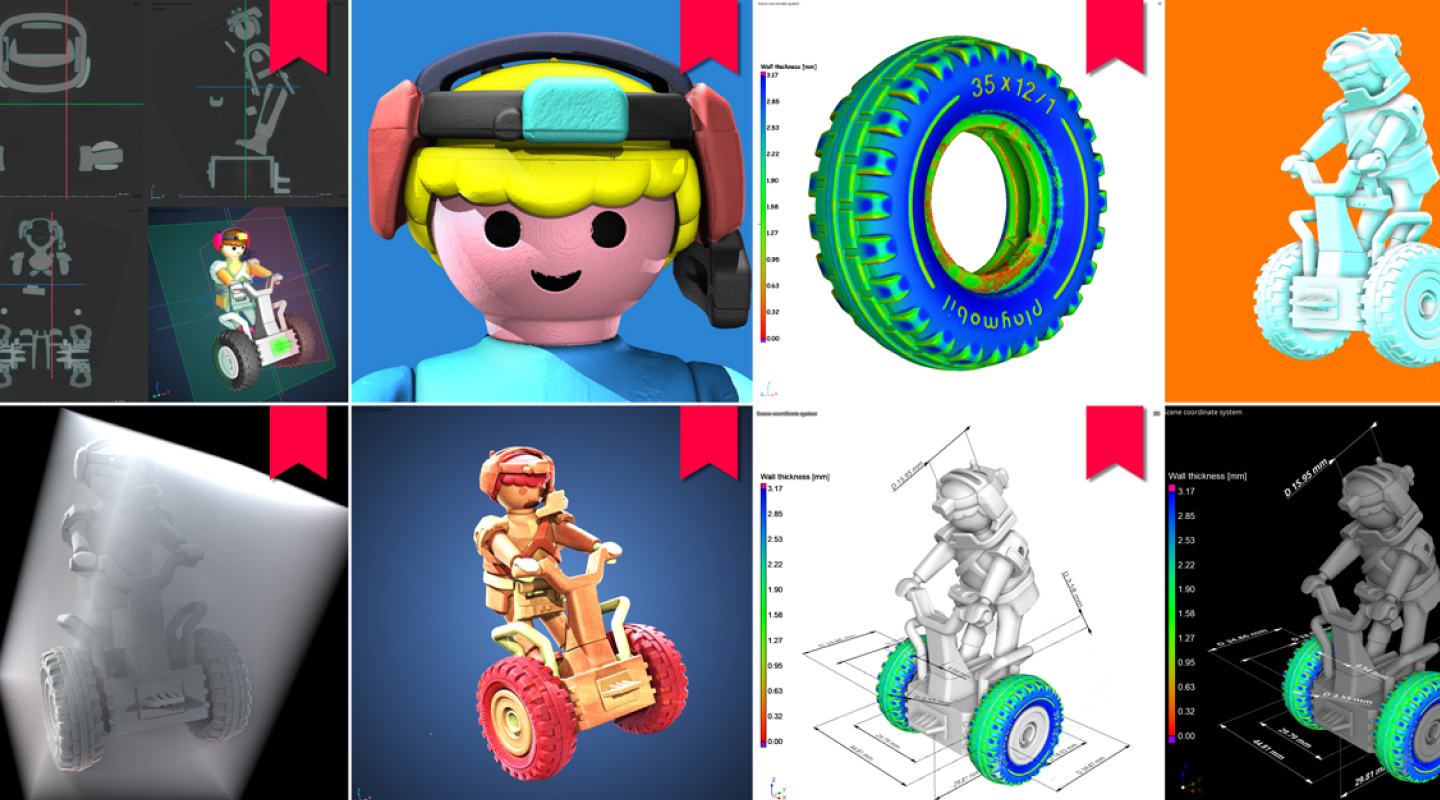
Bookmarks in VGSTUDIO MAX—as in real life—work wonders as placeholders. They save our spots in the project while we shift and rotate objects and work on other analyses. As such, we often drop them somewhere and come back to them later, which easily makes them one of the most overlooked, underused features in the software.
Check out how you can use these hidden gems of visualization to showcase your project!
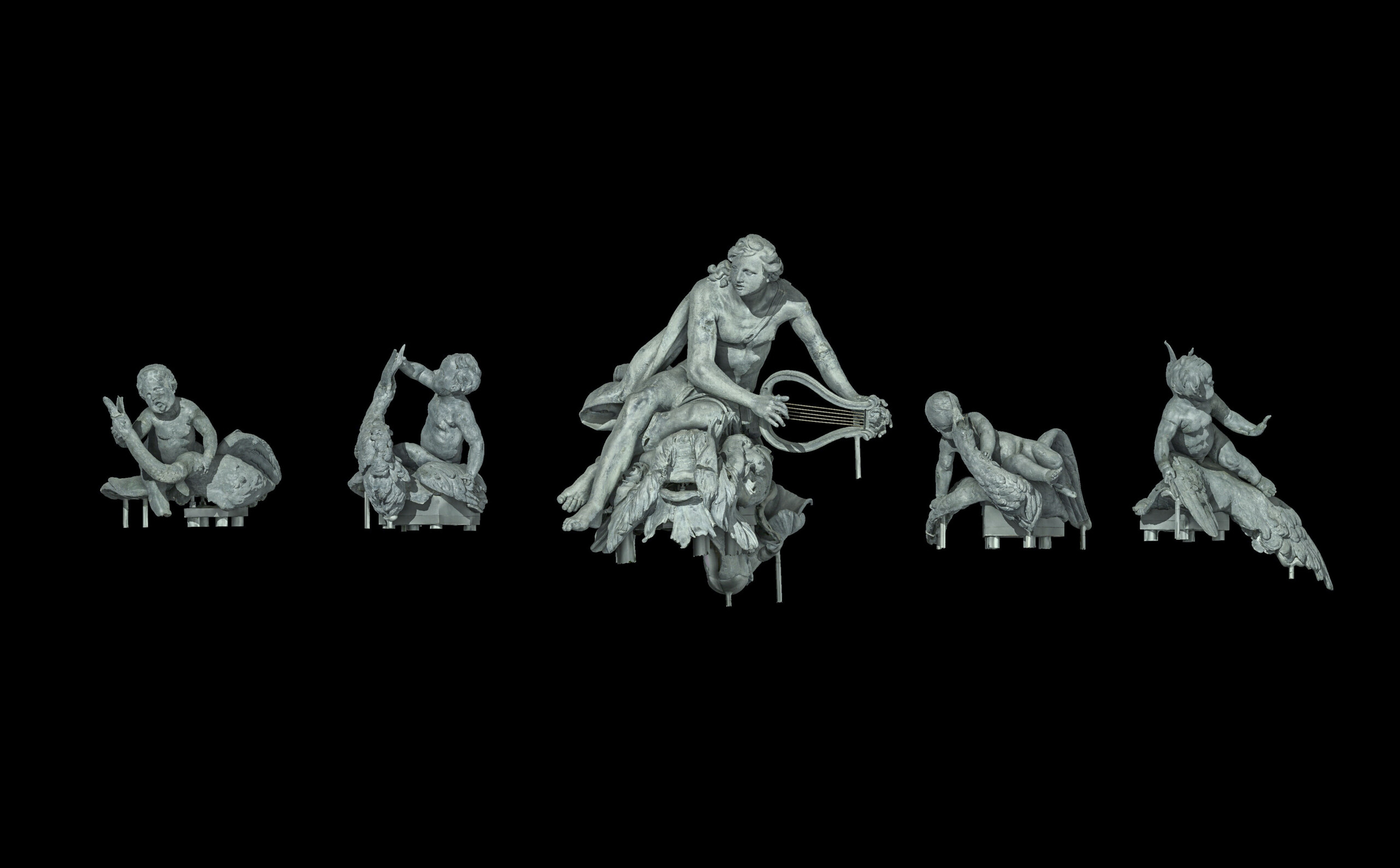
In the early 18th century, sculptor Barthélemey Giubal brought five figures to life for the palace gardens in Lunéville: the singer Arion and his four accompanying putti. In 1766, Prince Elector Charles Theodore had these sculptures brought to Schwetzingen. Now, centuries later, they will be journeying home—as 3D scans. Join Benjamin Moreno and Vincent Lacombe as they scan the sculptures in Schwetzingen Palace!

Whether it's a project milestone or a unique experience with Volume Graphics, our Storyteller Team looks forward to hearing from you.
Get in Touch